

The Day of the Triffids

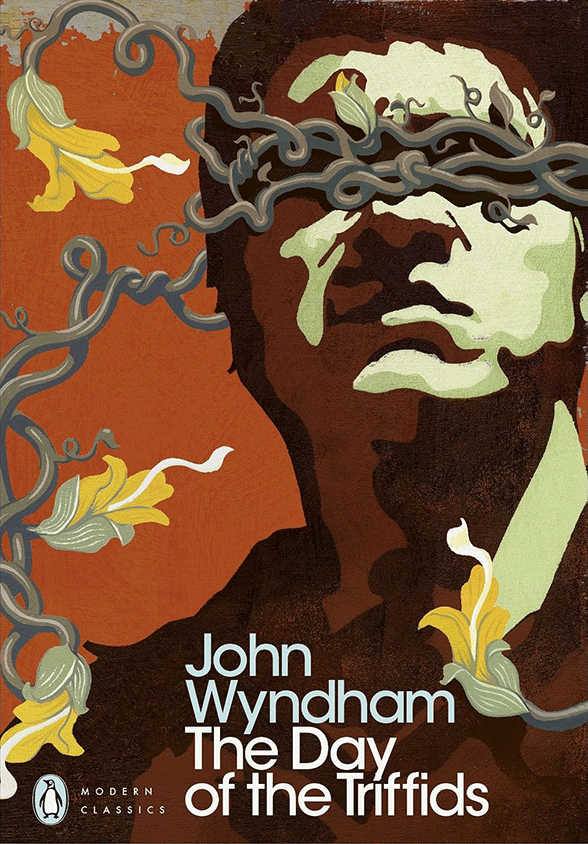
Auteur: John Wyndham;
Pages: 228;
When a day that you happen to know is Wednesday starts off by sounding like Sunday, there is something seriously wrong somewhere.
The Day of the Triffids est un roman de science-fiction post-apocalyptique. L’histoire suit Bill Masen, un homme qui se réveille dans un monde sens dessus-dessous après qu’un événement mystérieux a rendu la majorité de la population mondiale aveugle. Lui-même avait échappé à ce sort parce qu’il se trouvait dans un hôpital, les yeux bandés, suite à un accident de travail. Le jour où il devait rentrer chez lui, il se reveille dans son salon d'hôpital, entouré de personnes aveugles et d’un chaos total. Il réalise vite que la société est en train de s’effondrer rapidement.
En parallèle, des plantes carnivores mobiles appelées triffids, autrefois considérées comme une curiosité présentant certains risques, commencent à représenter une menace majeure pour les survivants, car elles sont capables de se déplacer, attaquer et tuer avec leur dard venimeux.
‘Did – did you see what that was? They were driving them.’
Sur son chemin Bill croise Josella, une autre survivante, qui avait été capturée par un aveugle qui s'en servait comme guide vers des ressources pour la subsistence. Bill l'aide à se libérer et tentent de résister ensemble dans la sauvagerie de ce nouveau monde.
Josella started to realize that the gift of sight, even at second hand, was now something vastly surpassing all riches, and the chance of it not to be released without bitter contest.
It’s not so much that I’m afraid of getting caught again – I’ll be much too careful for that. But, to be honest, it’s the loneliness I’m afraid of. I’m beginning to feel so – so cut off and stranded.’
Le roman suit leur fuite, leurs efforts pour trouver un refuge, et les difficultés morales et pratiques d’une civilisation en train de disparaître.
The future seemed to me at that time a choice between a lonely existence, always in fear of capture, or of gathering together a selected group which we could rely on to protect us from other groups. We’d be filling a kind of leader-cum-prisoner rôle – and along with it went a nasty picture of bloody gang wars being fought for possession of us.
Le roman explore surtout la survie, la fragilité de la civilisation et la manière dont les êtres humains réagissent quand l’ordre social disparaît. Bill découvre vite que l’aveuglement généralisé a provoqué le chaos, les pénuries et la montée de groupes cherchant à dominer les autres. Il rencontre d’autres survivants et tente de construire une nouvelle vie dans ce monde dévasté, tout en faisant face au danger constant des triffids.
‘You know, one of the most shocking things about it is to realize how easily we have lost a world that seemed so safe and certain.’
‘The conditions which framed and taught us our standards have gone with it. Our needs are now different, and our aims must be different.
‘In the time now ahead of us a great many of these prejudices we have been taught will have to go, or be radically altered. We can accept and retain only one primary prejudice, and that is that the race is worth preserving. To that consideration all else will for a time at least be subordinate. We must look at all we do, with the question in mind: “Is this going to help our race survive – or will it hinder us?” If it will help, we must do it, whether or not it conflicts with the ideas in which we were brought up. If not, we must avoid it even though the omission may clash with our previous notions of duty, and even of justice.
The men must work – the women must have babies. Unless you can agree to that there can be no place for you in our community.’ After an interval of dead silence, he added: ‘We can afford to support a limited number of women who cannot see, because they will have babies who can see. We cannot afford to support men who cannot see. In our new world, then, babies become very much more important than husbands.’
La nécessité incontournable de retourner aux techniques primitives de survie est une opportunité de réfléchir à notre dépendance à la technologie et à superficialité des conventions et des normes sociales dans des situations-limite - au fait le même thème développé dans "L'empéreur des mouches".
Dans une des scènes finales du roman, des années pus tard, Bill et Josella se permettent le premier jour de détente depuis la catastrophe et ils s'accordent le loisir de réfléchir au monde d'avant. Bill émet l'hypothése que la comète spectaculaire dont l'explosion avait rendu la population aveugle avait été au fait un experiment militaire échoué - ce qui nous pousse à méditer sur l'étendue des pouvoirs toujours plus grands que nous avons peu à peu confié aux barons de la guerre.
‘Up there,’ I went on, ‘up there, there were – and maybe there still are – unknown numbers of satellite weapons circling round and round the Earth. Just a lot of dormant menaces, touring around, waiting for someone, or something, to set them off.
[...] somehow or other we brought this lot down on ourselves.


Commentaires